Patch basics
Patch care: washing, drying, storage and early repairs
Plan washing, drying, storage and early repairs around the complete patch, backing and garment combination.
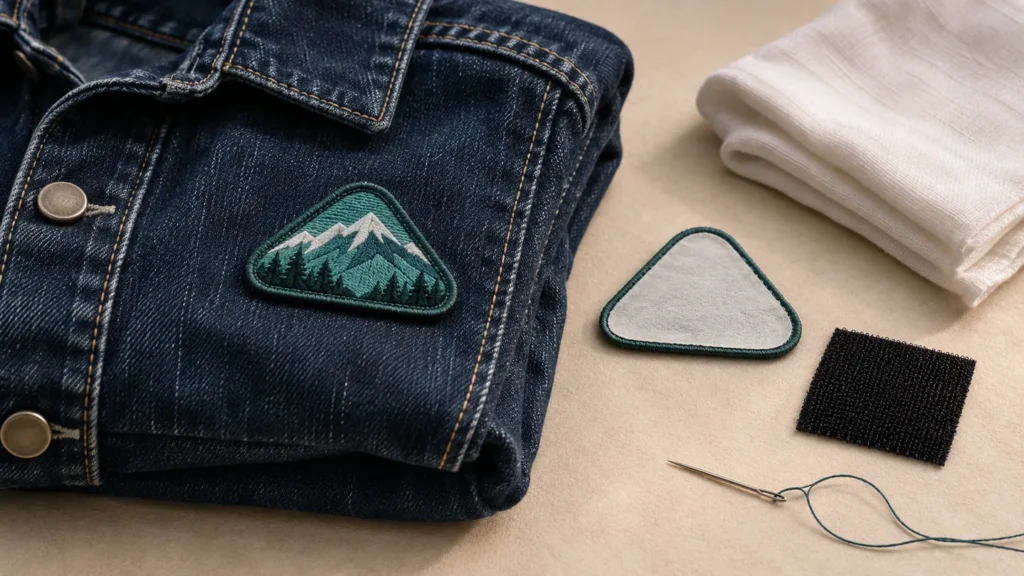
Patch care is a whole-garment decision. The thread may tolerate a cleaning process that the adhesive, leather, printed surface or garment cannot. Follow the most restrictive applicable instructions and keep the patch supplier's guidance with the garment care label.
Identify what you have
Before the first wash, record the patch material and attachment method. An embroidered sew-on badge, an iron-on printed patch and a removable PVC emblem should not automatically receive identical treatment.
Ask about the adhesive cure period after heat application. Washing a newly attached patch before that period has passed can undermine an otherwise correct application.
Build a sensible routine
| Situation | Practical approach |
|---|---|
| Removable patch | Remove it when the patch or garment instructions call for separate cleaning |
| Washable patched garment | Use the approved wash method, detergent and drying conditions |
| Delicate surface or leather | Follow material-specific care; do not assume machine washing is suitable |
| Loose edge or damaged stitches | Repair through an appropriate method before wear makes the damage worse |
| Collectible patch | Store clean and dry, with protection from crushing, abrasion and direct sunlight |
Where permitted, turning a garment inside out can reduce rubbing against other items. Avoid overloading the wash and keep exposed hooks, zippers or rough hardware from catching the patch surface.
Thread type matters
Polyester and rayon embroidery threads have different properties, and individual thread lines carry their own care instructions. Madeira's guidance explains that rayon requires more care around bleaching and some harsh conditions, while its polyester ranges may suit more demanding cleaning requirements.
That does not make a complete garment bleach-safe. The fabric, dyes, backing and other components still have to be compatible. For uniforms that undergo commercial laundering, give the supplier the actual cleaning specification before production.
Drying and heat can expose problems
Use only the drying method approved for the finished item. Avoid adding heat simply to speed up the process. If ironing is allowed, check whether the patch should be protected or ironed from the reverse, and follow the supplied method.
Do not press directly onto a leather or raised surface without guidance. Heat and pressure can change appearance even when an attachment remains secure.
Watch for early warning signs
Inspect the perimeter, attachment stitches and surface periodically. An edge that starts lifting is easier to address before it catches on something. A frayed thread should not be pulled, because doing so can disturb more stitching.
Photograph any change and note when it appeared: after the first wash, after a dryer cycle or after repeated rubbing from a strap. That information helps separate an application issue from material wear or a cleaning mismatch.
If color transfers, pause and ask for material-specific advice. Avoid experimenting with strong chemicals on the entire garment. Different fibers and dyes require different responses.
Store patches with their records
Keep spare patches flat in a clean, dry place away from direct sunlight. Protect textured faces from crushing and leather from prolonged damp storage. Separate hooks from surfaces they could snag.
For reorders, retain a labeled sample with its material, dimensions, backing and approved care process. A new batch that looks similar may still use a different adhesive or finish unless those details are specified.
A useful habit: test the intended cleaning process on a representative sample before a large uniform or merchandise run. It is more valuable than relying on a general claim that a patch “lasts for years.”
Further reading: Madeira's thread selection and cleaning considerations.
Have a patch or artwork project in mind? Talk with Embroidery Job.