Materials
PVC patches: relief, durability and the details to specify
Specify molded relief, colors, attachment and tooling questions for a clear, repeatable PVC patch order.
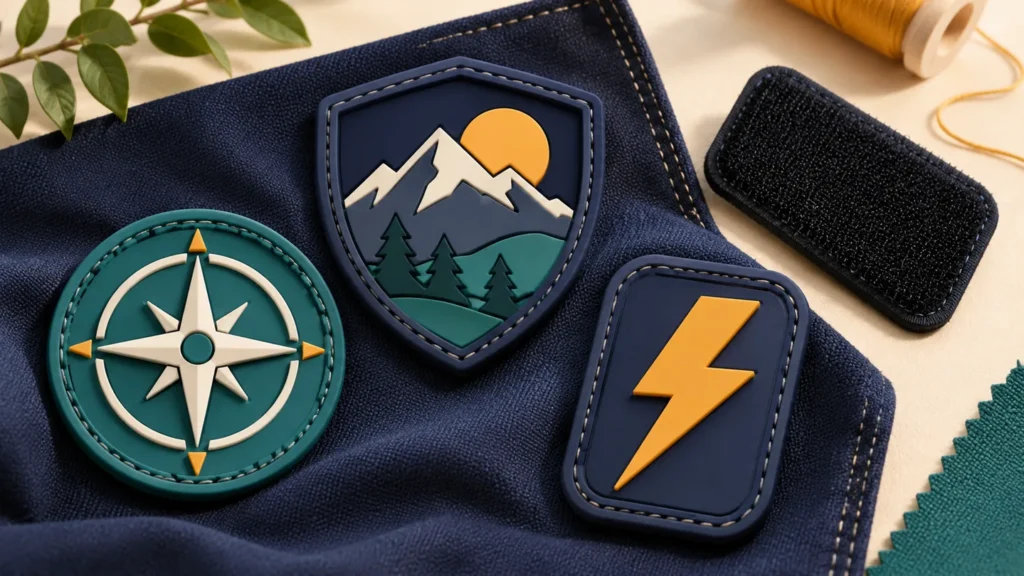
PVC patches suit artwork that benefits from defined color areas and molded relief. A compass, bold team symbol or geometric logo can gain depth without relying on thread texture. To get a predictable result, describe the shape and construction as carefully as the colors.
Decide where the depth belongs
A flat drawing does not fully describe a molded patch. Identify which areas should be raised, recessed or rounded. A simple design with two deliberate levels can read more clearly than a complicated design with raised detail everywhere.
When asking about a 2D or 3D treatment, request an explanation of the proposed relief. Different suppliers may use those terms differently. Mark a proof with the intended levels and ask which details need to become wider or simpler for production.
Write a complete specification
| Detail | What to provide |
|---|---|
| Finished size | Width and height, including the outer edge |
| Shape | Complete outline with rounded or sharp features identified |
| Colors | Named references and important matching priorities |
| Relief | Raised, recessed and curved areas |
| Attachment | Sew-on channel, removable backing or another confirmed option |
| Use | Garment or equipment, cleaning and exposure conditions |
Very narrow lettering, closely spaced lines and tiny isolated pieces may need adjustment. Review the design at actual size. A large on-screen preview can make a complex badge appear easier to read than it will be on a sleeve or bag.
Durability is about the whole patch
The molded face can be useful in damp or dirty settings, but the complete assembly includes backing, stitching, adhesives and the item underneath. Do not treat “PVC” as a blanket promise of waterproof attachment, unlimited sunlight exposure or resistance to every cleaning chemical.
Describe the intended environment and ask for the relevant product specifications. A backpack used on weekends and a work item cleaned frequently have different requirements. Test the actual patch and attachment combination before making strong performance claims to your own customers.
Plan the attachment before the mold
A sewing channel can help define where stitches should sit. It also takes up space around the design. If you need hook-and-loop attachment, confirm which parts are included and whether the garment already has a compatible receiving area.
For curved surfaces, check flexibility and fit with a sample. A large or thick patch may bridge over a curve instead of following it neatly. Our backing guide covers the questions that apply across materials.
Understand setup and repeat orders
Ask whether the quote includes mold or tooling costs, what happens if the shape changes, and whether tooling can be reused for a repeat order. Confirm any storage period or ownership arrangement in writing. Do not assume that a small artwork change is free once production tooling exists.
Keep the approved proof, color reference, dimensions and sample reference together. For repeat orders, compare a new sample against the retained approved one under similar lighting.
When should you choose something else?
A photograph or soft gradient may be better suited to a printed patch. A traditional textile appearance may favor embroidery. PVC is strongest when the design makes deliberate use of clear shapes and relief. Send your artwork and intended use through Custom Order so those details can be reviewed before production.
Have a patch or artwork project in mind? Talk with Embroidery Job.