Branding
Styling patches on denim, streetwear and everyday clothes
Style patches on denim and everyday clothing with deliberate placement, color, attachment and care decisions.
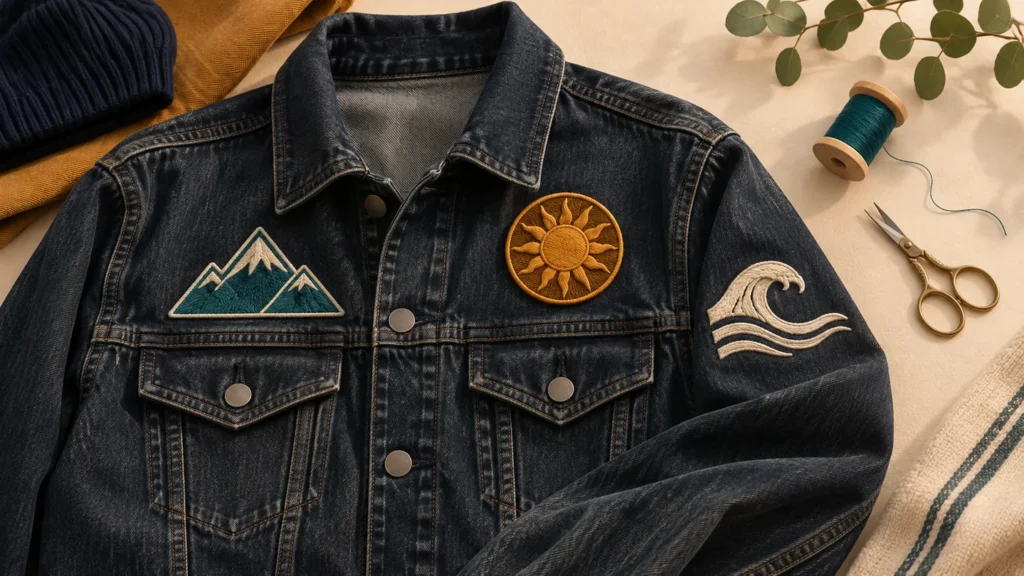
Patches can give an everyday garment a focal point, connect pieces in a collection or make an older item feel personal again. The strongest layouts have a clear visual decision behind them. Adding more badges is not automatically the best way to create character.
Choose one of three layout approaches
One focal patch: a chest badge, sleeve emblem or jacket-back design carries the look. Keep surrounding details quiet so its shape and texture are easy to see.
A controlled cluster: several patches share a theme, color family or story. Vary their sizes deliberately, then leave enough space for each outline to remain recognizable.
A collected layout: patches accumulate over time from trips, clubs or events. Reserve areas for future additions and keep attachment methods compatible with the garment.
Try the layout with paper templates before committing. Photograph the garment while it is worn; seams, folds and body movement can change the balance substantially.
Let the garment guide placement
Denim and sturdy canvas often provide a stable visual base, but pockets, linings and seams still constrain attachment. Thin shirts and stretchy knits need more attention to the patch's weight and stiffness. A large badge that works on a jacket may pull a lightweight garment out of shape.
Avoid assuming a pocket remains usable after decoration. Check where stitches or adhesive will go. For sleeves and trouser legs, assess the design in a bent position as well as laid flat.
Build a palette with a clear role for contrast
| Style direction | Useful design choice |
|---|---|
| Quiet everyday branding | One restrained badge with visible contrast |
| Varsity-inspired statement | Bold lettering and deliberate layered edges |
| Outdoor collection | Related symbols with a limited shared palette |
| Expressive streetwear | A strong focal shape supported by smaller details |
Color repetition can connect different materials. A tan leather badge and an embroidered badge may feel related through the same emblem and placement rules, even though their surfaces differ.
Plan beyond the first wear
Choose attachment and care around how the garment will actually be used. A temporary adhesive decoration may not be appropriate for repeated washing. A permanent badge on a frequently cleaned item needs a compatible construction and application method.
If the patch covers damage, stabilize the garment first where necessary. Decoration alone may not stop a tear spreading. Read our DIY and repair guide for a practical planning sequence.
Create original references, not accidental copies
Collect references for shape, proportion, color and texture, then build an original design around your own identity. A familiar band logo, sports emblem or illustrated character may require permission for reproduction. Changing its color does not turn it into original brand artwork.
For a collection, write a short design rule sheet: preferred palette, edge treatment, logo versions and placement range. That gives future pieces a recognizable connection without repeating the same badge on everything.
How many patches are too many?
There is no fixed number. Step back and ask whether the intended focal point is still clear, whether the garment moves comfortably, and whether every badge contributes to the story. If the layout feels crowded, remove the least important element first. Our brand consistency guide can help turn a personal experiment into a coherent product range.
Have a patch or artwork project in mind? Talk with Embroidery Job.