Merch planning
Custom keychains: materials, artwork and thoughtful gift ideas
Compare keychain materials, artwork, hardware and personalization details before approving the complete assembly.
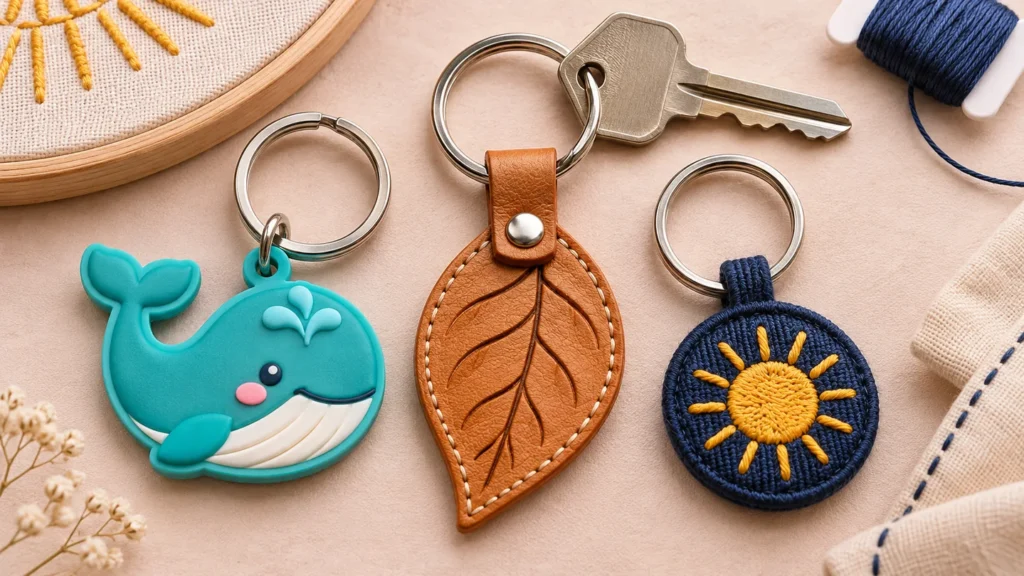
A custom keychain needs to look good, feel comfortable in use and survive being handled repeatedly. Its artwork is only one part of the design. The connection point, hardware, thickness and edge finish all affect the result, especially when the item will be carried with keys every day.
Choose the material around the design
Embroidered keychains offer a textile surface and can suit short names or bold symbols. Leather can work with a restrained engraved identity. PVC can give clear color areas and molded relief. Each choice changes the available detail, feel and construction.
Ask for the complete specification rather than choosing from a front-view mockup alone. Confirm whether the artwork appears on one side or both, how the edges are finished and which hardware is included.
Design around the attachment point
| Detail | What to check |
|---|---|
| Ring or connector | Included size, finish and connection method |
| Hole or loop position | Adequate material around the stress point |
| Overall dimensions | Comfortable size including the hardware |
| Reverse side | Finished appearance and any secondary artwork |
| Corners and edges | Comfortable handling without unnecessary sharp points |
A narrow projection may look elegant in artwork but be unsuitable near a connection point. Ask the producer to review the shape for the chosen material. Test the sample by handling it normally and examining where the connector meets the main piece.
Keep personal details useful
A short name, initial or original symbol is often enough. Long messages become hard to read on a small item, especially if the design moves or folds. For a gift set, use one approved layout and a single checked list of variations.
Think carefully before putting a home address or other private information on an item that may be lost. If identification is part of the purpose, choose the information deliberately rather than filling every available line.
Make branded giveaways worth keeping
Tie the design to a real audience interest or useful identity. A recognizable club emblem or thoughtful event symbol may be more appealing than a crowded advertisement. Put additional company information on the packaging if it does not fit comfortably on the product.
For a retail collection, show the actual size, reverse side and hardware in photographs. Explain what is included and whether color or grain variation is expected. Do not describe a concept rendering as a photograph of finished stock.
Sample the whole assembly
Review print, stitching, engraving or molded detail as appropriate, then inspect the connector and edge. Confirm the material and care guidance. If the item is intended for a particular age group or regulated use, obtain the relevant product requirements from the manufacturer rather than relying on a decorative sample.
Compare quotes on the same dimensions, material, sides, hardware and packaging. Setup costs and variable names can change the total, so provide those details at the beginning.
Build a repeatable order
Keep the approved artwork, color references, hardware description and sample reference together. For event gifts, include time for sorting personalized variations before distribution. Use our ordering guide to prepare the brief, and confirm the available keychain construction for your project through Custom Order.
Have a patch or artwork project in mind? Talk with Embroidery Job.