Materials
Choosing a patch material: embroidery, woven, PVC, leather and more
Compare embroidery, woven, PVC, leather, chenille and printed patches by artwork, feel, garment and intended use.
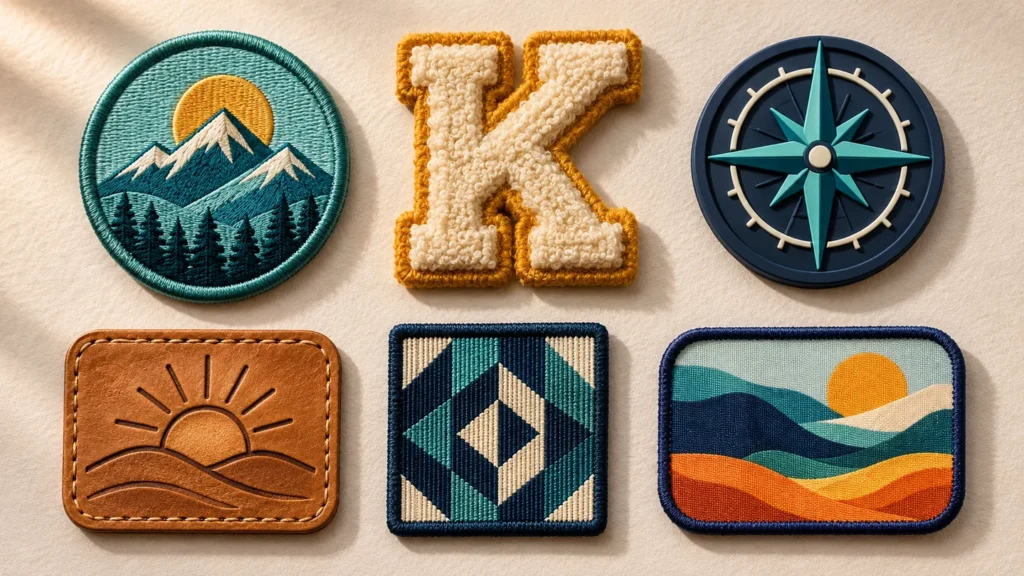
The right patch material is the one that preserves your artwork, suits the garment and survives its intended use. Start with those three requirements before comparing prices or choosing the finish that looks best in a large screen mockup.
Compare the finished result
| Material | What it does well | What to check first |
|---|---|---|
| Embroidered | Visible thread texture, bold logos and traditional emblems | Small lettering, narrow gaps and stitch direction |
| Woven | Fine lines and compact lettering with a flatter surface | Actual-size readability and border treatment |
| PVC | Raised shapes, defined color areas and a flexible molded surface | Relief levels, fine detail, thickness and mold cost |
| Chenille | Plush varsity letters and large, simple shapes | Space around letters and the supporting felt |
| Leather or leather alternative | Engraved marks and restrained, tactile branding | Exact material, contrast, finish and care requirements |
| Sublimated | Photographs, gradients and illustrated color transitions | Print sharpness, fabric texture and edge finish |
These are starting points, not quality rankings. A carefully made woven label can suit a small fashion mark better than a heavily embroidered badge; a bold embroidered emblem can make a stronger impression when texture is the point.
Let the smallest important detail decide
Print your design at its intended width. Circle the smallest letter, thinnest line and narrowest empty space. Those details reveal whether the artwork needs simplification, more room or a different process.
An outdoor club might use embroidery for a simple mountain badge, woven construction for a compact badge with a long name, and sublimation for a photographic anniversary design. Keeping the same outer shape and colors can tie the collection together without forcing every image into one process.
Avoid selecting a material only because a competitor uses it. A design that works at four inches can behave very differently at two inches, and a patch made for a bag may feel bulky on a lightweight shirt.
Material and backing are separate decisions
“Iron-on” describes an attachment method; it does not tell you whether the front is embroidered, woven or printed. Likewise, a hook-and-loop patch needs a compatible receiving surface on the garment or equipment.
Choose the face material first, then check which backing suits both the patch and the item receiving it. If heat application is being considered, confirm the complete combination with the supplier rather than assuming the garment can tolerate a generic temperature.
Specify the environment
Write down how the item will actually be used: occasional events, daily uniform wear, outdoor gear, regular domestic laundry or commercial cleaning. Also note whether the patch must bend with the garment, be removable or sit close to the body.
Ask for evidence relevant to that use. A clean product photograph cannot establish wash resistance, attachment strength or compliance with a uniform specification. A representative sample on your actual garment is far more informative than a sample in an unrelated material.
A useful comparison request
Send the same artwork and dimensions for two suitable options. Request the face material, backing, border, quantity, setup charges and sample process in each quote. Compare the complete installed result, including attachment work, rather than the unit price alone.
Before ordering: approve one material, one finished size and one attachment method in writing. Keep the sample reference with those decisions for future reorders.
Common questions
Which material is best for tiny text? Woven or printed construction may preserve it more clearly, but the actual size and font still matter. Review a sample instead of relying on a universal minimum letter height.
Is PVC always more durable than embroidery? It resists some kinds of fraying and surface wear differently, but the edge, backing, garment and exposure all affect service life. See the PVC guide for a more useful comparison.
Can several materials share one brand identity? Yes. Define the outer shape, color references and simplified logo versions so each material expresses the same identity within its own limits.
Have a patch or artwork project in mind? Talk with Embroidery Job.