Teams & events
Fire and EMS patches: a clear design and ordering brief
Prepare fire and EMS patch briefs with clear purpose, approved artwork, garment requirements and sample checks.
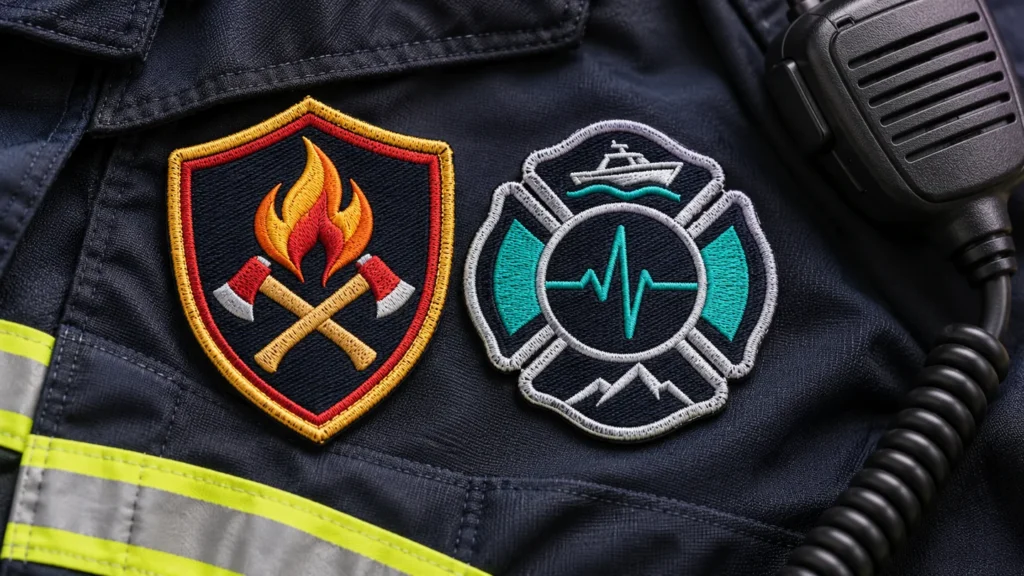
Fire and EMS patches need a clear brief because the badge may represent a department, station, training group or commemorative event. Those uses are related, but they do not necessarily share the same approval process or uniform requirements. Establish the purpose before designing the artwork.
Separate identification from commemoration
An operational uniform patch should follow the organization's current requirements. A station anniversary or fundraising design may allow a different layout, but it still needs the relevant approval. Do not assume that a decorative badge is suitable for protective clothing simply because it carries an emergency-service symbol.
Ask the responsible organization which emblem, wording, colors and placement are permitted. Obtain the current artwork from an authorized source. An image found online may show an obsolete badge, a different organization or a design that was never approved for uniform use.
Build a brief that can be checked
| Decision | Confirm with the organizer |
|---|---|
| Purpose | Uniform identification, event, recognition or collection |
| Wording | Department, station, role and any date |
| Artwork | Approved symbols and current file version |
| Placement | Garment model, position and finished dimensions |
| Construction | Material, edge, backing and cleaning requirements |
| Approval | Named reviewer and final sign-off process |
For an event patch, distinguish the event name from the organization's official identity. A clear commemorative date and layout can help explain why the design differs from the normal uniform badge.
Keep important information readable
Choose the department or station name as the primary text. Add secondary wording only if it remains clear at the intended size. Detailed scenes, multiple tools and long mottos can crowd a small badge; simplifying the illustration may improve recognition more than adding another color.
Review a printed actual-size proof and a physical sample where appropriate. Check curved text, small numbers and the spaces between symbols. Our design guide explains how to assess those features without relying on an enlarged screen image.
Specify use and care honestly
Describe the garment and cleaning routine to the producer. If the patch will be used on protective equipment, have the responsible equipment or uniform authority establish the requirements before choosing or applying any decoration. Ordinary patch materials and adhesive claims are not evidence of protective performance.
For non-operational polos, jackets or event apparel, still confirm fabric compatibility and attachment instructions. A sewn edge, heat-applied backing and removable attachment are different specifications with different practical consequences.
Plan the approval and distribution process
Gather quantity by garment or intended recipient before requesting a quote. Decide whether spare stock is needed and who may receive or purchase the design. For a fundraiser, keep the organizer's permissions and the stated use of proceeds accurate in the promotional copy.
Record the final approved proof, dimensions, colors and sample reference. Future reorders should begin with that record, not a photograph of a worn patch. If the design changes, give the new version a distinct reference so old and new batches are not accidentally mixed.
Start with the ordering checklist once the organization has confirmed the brief. It will help separate artwork approval, construction questions and the required delivery date into decisions the producer can actually verify.
Have a patch or artwork project in mind? Talk with Embroidery Job.