Branding
Launch patch merchandise people have a reason to keep
Plan patch merchandise around audience demand, complete costs, real product photographs and useful feedback.
Patch merchandise works best when people have a reason to identify with it: a place, event, shared interest or original design they want to wear. Before ordering stock, define that reason and the practical route from sample to customer.
Start with the audience and the item
Write one sentence describing who the patch is for and why they would keep it. A local walking club badge, an artist's small collection and a workplace recognition patch serve different purposes. That sentence should guide the design, quantity and packaging.
Decide whether you are selling loose patches, decorated garments or a bundle. Loose patches need clear dimensions, backing information and application guidance. Finished garments need accurate sizing and care information as well as photographs of the decoration.
Build a modest first collection
Start with a coherent theme and a manageable number of designs. A large launch can divide demand across too many variations and leave stock difficult to replenish. Test the strongest ideas with samples or genuine audience feedback before committing to a broad range.
If you use a limited edition, state the limitation accurately. Do not describe a design as scarce merely to create urgency when more units are already planned. Keep any numbered production records consistent with the claim.
Calculate the complete cost
| Cost area | Include |
|---|---|
| Product | Patch construction, setup and approved options |
| Presentation | Cards, bags, labels and application instructions |
| Fulfillment | Packing materials, handling and delivery |
| Sales channel | Relevant transaction or marketplace fees |
| Allowances | Samples, replacements and unsold inventory |
Compare the expected selling price with the full cost, not only the patch's unit price. Use your own numbers and account for local tax or business requirements with appropriate advice. A cheaper large order is not a saving if much of it remains unsold.
Photograph the real product clearly
Show a front view, a close material view, the backing and a size reference. Include the patch on its intended item where useful. Keep colors reasonably consistent across photographs and avoid filters that change the product's appearance.
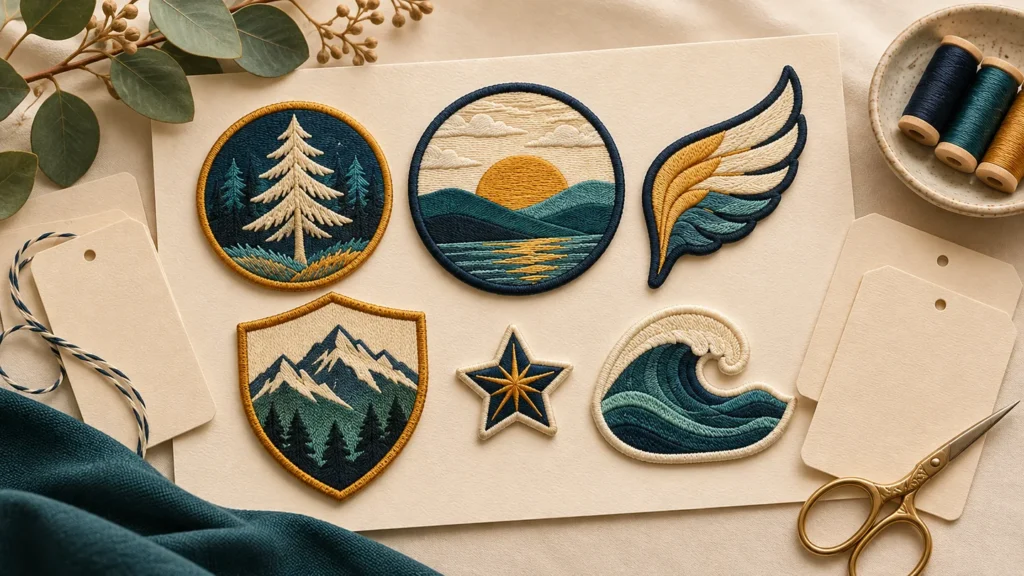
Concept artwork can help explain a design before sampling, but label it as a concept. Do not present generated imagery as a photograph of finished stock or a customer's completed order. Replace concepts with real sample photographs when you have them.
Give customers the details they need
State the finished dimensions, material, attachment method and whether the garment pictured is included. Explain the application process using the instructions for the actual product. Include care guidance and a clear route for questions.
For a collaboration, confirm permission to use the artwork and agree who approves the final sample. For event or club designs, establish whether the patch is available to everyone or only eligible participants before promoting it.
Use the first run to improve the second
Track sales by design, repeated questions, application issues and requests for different sizes or backings. Separate genuine demand from polite social-media reactions. Reorder based on that evidence and the time required to restock.
Our ordering guide helps structure sample approval and production questions. For a coordinated range across several products, use the brand specification approach so new additions feel like part of the same collection.
Have a patch or artwork project in mind? Talk with Embroidery Job.