Merch planning
Challenge coins, medals and tokens: a thoughtful recognition brief
Prepare a clear challenge coin, medal or token brief covering purpose, relief, wording, materials and presentation.
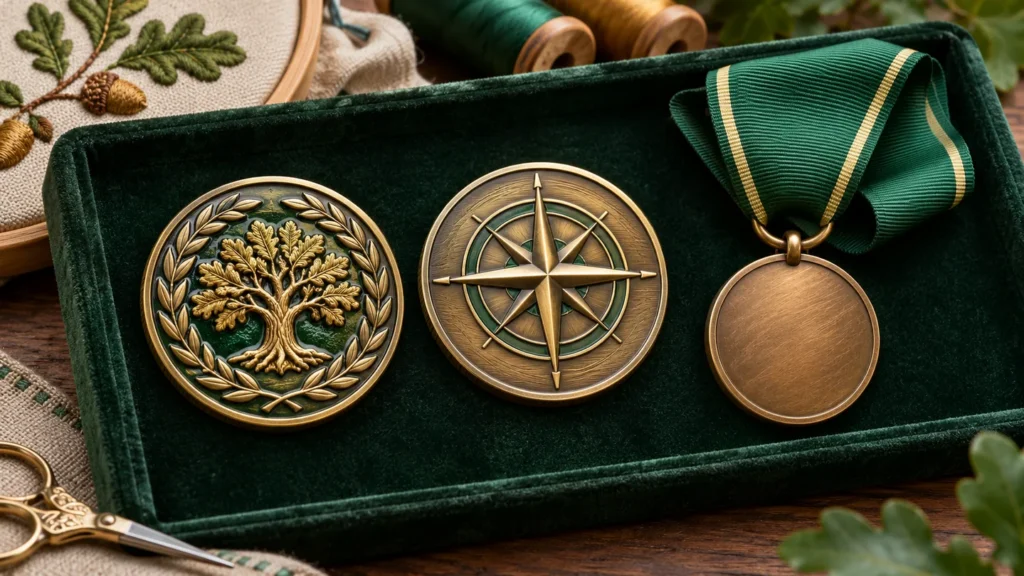
A challenge coin, medal or token can mark service, achievement, membership or an event. The object is most meaningful when its purpose is clear and the design supports that purpose. This guide helps prepare an artwork and ordering brief for a specialist manufacturer; it does not imply Embroidery Job manufactures these products.
Define why the item is being given
Write down the occasion, intended recipients and the message the object should carry. A recognition coin, a participant medal and a promotional token serve different roles. Decide whether the recipient's name, event date or edition needs to appear on the piece or on its presentation material.
Traditions around challenge coins and similar keepsakes vary. Follow the actual organization's practice rather than assuming a universal ceremony or rule. Avoid assigning a historical origin story to a design unless you have a reliable source for it.
Give each side a clear job
One side might carry the primary emblem while the reverse explains the occasion. Keep the most important wording large enough to read at the finished size. Long quotations, multiple logos and dense decorative borders can overwhelm a small object.
For relief artwork, identify which areas should be raised or recessed. A flat illustration does not fully describe the intended depth. Ask the manufacturer to explain how the proof represents the finished surface.
Specify the complete object
| Feature | What to confirm |
|---|---|
| Shape and size | Overall dimensions and any unusual cutouts |
| Material and finish | Actual composition and agreed surface appearance |
| Color | Fill areas, references and special treatments |
| Edge | Plain, patterned or another confirmed finish |
| Personalization | Names, numbers or dates and their placement |
| Presentation | Case, pouch, ribbon or backing information |
For medals, include the ribbon and connection hardware in the specification. For numbered editions, define the numbering format and check the full sequence. Small administrative mistakes can be more costly than a minor visual adjustment.
Keep authority and permission accurate
Use approved organization marks and confirm who may authorize the order. Official seals, military identities and other institutional symbols should not be reproduced merely because an image is available online. A commemorative item should not be presented as establishing official status or qualification.
For employee or volunteer recognition, agree on eligibility and wording before production. Consistent criteria help the object communicate the intended appreciation without creating confusion about what it represents.
Review a physical sample
Check readability, relief, surface finish, edge quality and how the item feels in hand. Compare both sides and verify their orientation. Inspect personalization against the approved list, not memory.
Ask the manufacturer about tooling, repeat orders, sample costs and changes to the design. Keep the approved proof and sample reference together. Any claims about metal content, plating or specialist performance should come from the product specification rather than assumptions based on appearance.
Tell the story on the presentation card
A short, factual explanation can carry details that would crowd the object itself. Name the occasion and why the recipient is receiving it. If artwork preparation is needed, our file preparation guide can help organize the original logo and references for the specialist producer handling the project.
Have a patch or artwork project in mind? Talk with Embroidery Job.