Merch planning
Planning an enamel pin collection, from first sample to repeat orders
Build a coherent enamel pin collection with controlled variants, sample records, honest editions and full cost planning.
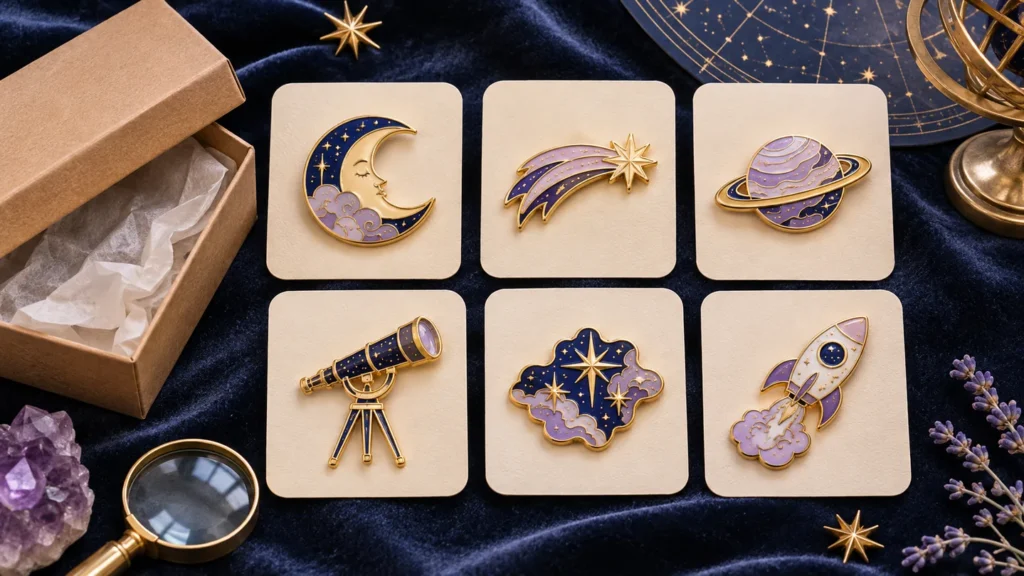
A pin collection becomes easier to understand when the pieces share a clear idea. That might be a place, an original character series, a set of interests or a community milestone. Begin with the theme and the likely buyer before choosing how many designs to manufacture. This guide covers collection planning; confirm production and availability with your pin manufacturer.
Give the collection a simple rule
Define what makes a design belong in the series. Shared proportions, metal finish, palette or illustration style can connect pieces without making them identical. Write the rule down so future additions do not drift into an unrelated visual direction.
If the collection uses licensed characters, organizations or artwork by another creator, settle permissions before production. A theme inspired by a general activity can be original; reproducing a recognizable protected design is a separate matter.
Start with a manageable range
Choose a small group of strong designs and test genuine interest. Social-media reactions can inform the process, but they are not the same as confirmed demand. Too many variants can divide orders and leave the less popular designs sitting in stock.
For a numbered or limited edition, define the edition accurately and keep the production record. If more copies may be made later, avoid language that suggests a fixed scarcity you do not intend to maintain.
Compare the full production brief
| Area | Keep consistent or explain the variation |
|---|---|
| Size | Relative scale across the series |
| Construction | Soft enamel, hard enamel or another confirmed process |
| Finish | Metal appearance and color references |
| Hardware | Post placement and clutch specification |
| Presentation | Backing cards, labels and protective packaging |
Ask which setup or tooling costs apply to each design. A color variant may have different implications from a new outline or size. Do not assume a set is priced as one design simply because it shares a theme.
Build a sample approval record
Review the first samples side by side. Check that the palette, line character and proportions feel related. Inspect the reverse and attachment as carefully as the front. Record any accepted variation and the exact changes required before production.
Save one approved reference for each design where possible. For later reorders, compare against that reference rather than a promotional photograph whose lighting may differ.
Photograph and describe the product honestly
Show the front, reverse, scale and hardware. State whether backing cards or other accessories are included. If a design is still at concept stage, label its image accordingly and explain the approval process before taking commitments from buyers.
Do not invent claims about rarity, investment value or future collectibility. Explain the design's story and actual edition details instead. Those are useful facts buyers can evaluate for themselves.
Use feedback to plan the next release
Track sales by design, repeat questions, packaging issues and requests for additions. Keep the next release connected to the collection's rule while responding to real preferences. Include the costs of samples, packaging, fees and unsold stock when evaluating the project.
Our pin artwork guide covers the manufacturing-aware design decisions. For broader planning across patches and other keepsakes, use the merchandise launch guide to organize the audience, costs and product information.
Have a patch or artwork project in mind? Talk with Embroidery Job.